Part 01
Rethinking the SDLC: Execution Is No Longer the Constraint
The software development lifecycle is a stock-control system for a resource that stopped being scarce. Every phase gate, every batch, every handoff …
Part 02
A Ticket Is a Lossy Compression of Intent
Tickets worked because a human unpacked them using context nobody ever wrote down. Hand the same ticket to an agent and you find out how much of your …
Part 03
The Scarce Skill Isn't Writing Code. It's Knowing What Shouldn't Exist.
Seniors who defend their value by pointing at code they wrote are arguing from ground that has already gone. The engineers who win the next five years …
Part 04
Human Review Is Scarce Now. Stop Spending It Line by Line.
Do the maths on your review capacity and the answer is brutal: most teams passed it long ago and are covering the gap with approval theater. …
Part 05
Coverage Was Always Theater. Agents Made It Free.
When an agent writes both the code and the tests, you get a closed loop with nothing checking it from outside — and a coverage number that goes up. …
Part 06
Your Pipeline Runs Scripts. It Should Be Making Decisions.
CI/CD was built to run a fixed sequence for a change a human already understood. Under agent volume that design fails in one specific way: the same …
Part 07
Your Infrastructure Assumes a Human at the Keyboard
Terraform, Kubernetes, and every cloud console were designed around a human who hesitates, notices the environment name, and feels dread before typing …
Part 08
Stop Asking Whether Agents Should Act in an Incident. Decide How Far.
Break down your MTTR honestly and most of it is human delay: paging, waking, getting your bearings, forming a theory. Agents remove exactly that …
Part 09
Your Dashboards Were Built for Eyes. Your Operator Doesn't Have Any.
A dashboard throws most of your telemetry away, and it is tuned for what a pair of eyes can take in. Alert thresholds exist because people cannot …
Part 10
Technical Debt Just Got Cheaper. Something Worse Moved In.
The migration you put off for six years is now a weekend. Classic technical debt got far cheaper to pay off, because mechanical change stopped costing …
Part 11
DORA Measured the Old Constraint. Agents Broke the Instrument.
Deployment frequency and lead time worked for one reason: they were hard to fake while humans typed every line. Agents made them easy to inflate. …
Part 12
Your Agent Has Prod Access. Your IAM Thinks It's a Person.
Every identity system we built authorizes a principal making a request, assuming that principal decided to make it. An agent’s request comes …
Part 13
You're Not Managing Engineers Anymore. You're Allocating Judgment.
Sprint planning handed out the scarce resource: engineer-hours. That resource now stretches on demand, and the thing that is really capped is how much …
Part 14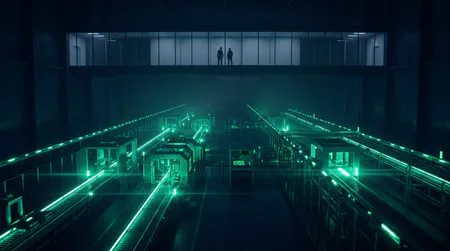
The Agentic Software Factory: Every Control Surface, Named
Thirteen pieces built the parts. This one puts them together: the whole flow from intent to verified behavior, the nine control surfaces where humans …